Vendor Management Workflow Checklist: A Proactive Guide
Founder & Editor, Template Registry
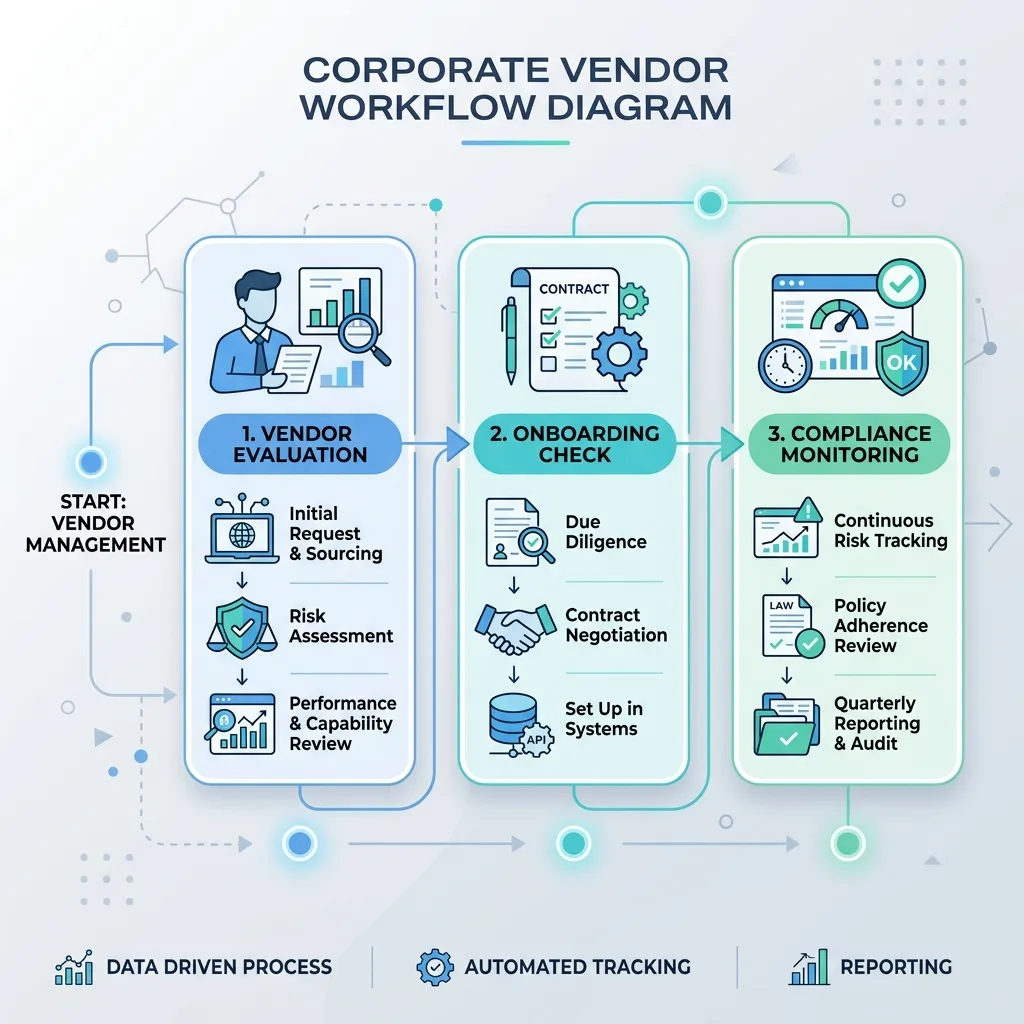
Most companies treat vendor management as an administrative burden. They view it as a necessary evil involving spreadsheets, sporadic email threads, and the occasional panic when a contract nears expiration. But if you handle external partners this way, you are creating massive operational vulnerabilities. A broken supply chain or a security breach originating from a third party can cripple your business overnight.
If you want to move from reactive firefighting to proactive governance, you need a standardized vendor management workflow checklist. This isn't just about administrative tidiness; it’s about protecting your bottom line and ensuring that every dollar spent with a third party actually drives business value.
Key Takeaways: Vendor Management Workflow Checklist
| Phase | Goal | Critical Action |
|---|---|---|
| Onboarding | Risk Mitigation | Verify business credentials and security certifications. |
| Contracting | Performance Alignment | Define clear SLAs and exit clauses. |
| Monitoring | Value Realization | Conduct quarterly performance reviews. |
| Offboarding | Data Security | Revoke system access and purge non-essential records. |
When you treat third-party relationships like a formal ecosystem, you gain control over risk and cost. Just like implementing a candidate onboarding checklist is essential for standardizing how you bring in human talent, your vendor management workflow checklist acts as the framework for your business partnerships.
Defining the Ecosystem: Key Terminology
Before building your SOPs, we need to establish a shared language. Operations management isn't just about doing things; it’s about doing them according to repeatable, documented standards.
- Vendor Risk Management (VRM): The process of identifying, analyzing, and mitigating risks associated with third-party vendors. This aligns with frameworks like ISO 27001 for information security management.
- Service Level Agreement (SLA): A documented commitment between a service provider and a client. It outlines the scope of work, quality metrics, and penalties for failure.
- Supply Chain Resilience: The ability of a business to absorb a shock and recover, a concept heavily influenced by CISA supply chain guidelines.
- Due Diligence: The investigative process conducted prior to signing a contract, ensuring the vendor has the financial and operational stability to fulfill their obligations.
Phase 1: The Pre-Onboarding Due Diligence
Most organizations fail before they even start. They find a vendor they like, sign a contract, and only then realize the vendor doesn't have the insurance or the security posture required for the project.
Create a Risk Profile
Before you reach out to a potential partner, define the "Risk Profile" of the engagement. Is this vendor handling sensitive customer data? Are they providing critical software infrastructure? Or are they delivering office supplies?
High-risk vendors require a deep dive into:
- Financial Stability: Can they survive a fiscal downturn?
- Compliance Record: Do they have a history of regulatory fines?
- Security Posture: Do they meet your minimum security requirements, such as SOC 2 Type II or GDPR compliance?
Standardize the Intake
Do not allow ad-hoc vendor requests. If an employee decides they want to use a niche SaaS tool, they must submit a request form. This form should be the first step in your vendor management workflow checklist. It should require them to specify the business case, the data involved, and the total cost of ownership (TCO).
Phase 2: Contracting and Performance Metrics
The contract is not just a legal document; it is an operational manual. If your contract is generic, your output will be mediocre.
SLA Design
Stop defining success as "a good job." Define it as "a 99.9% uptime rate" or "delivery within 48 hours of ticket submission." Metrics must be objective, measurable, and tracked in a centralized dashboard. If a metric isn't measurable, it’s not an SLA—it's a wish.
Exit Clauses
Never sign a long-term contract without an explicit, cost-effective exit strategy. What happens if the vendor fails to meet performance goals for three months? You need the right to terminate early without a massive penalty. Ensure your legal team builds in "Right to Audit" clauses so you can inspect their internal controls if they handle high-risk data.
Phase 3: The Ongoing Monitoring Lifecycle
Once the contract is signed, most vendors vanish from the radar until the renewal date. This is a massive failure of governance.
Quarterly Business Reviews (QBRs)
For critical vendors, a QBR is non-negotiable. This meeting shouldn't be about just reviewing past invoices. Focus the agenda on:
- Performance vs. SLAs: Where did we miss the mark?
- Roadmap Alignment: How does the vendor’s future product release align with our business goals?
- Feedback Loops: Is there friction in the communication process?
Automated Compliance Triggers
Use your operations software to trigger automated alerts for certification renewals. If your vendor’s insurance policy expires on June 30th, you should get an automated notification on May 1st. You don't want to find out your vendor is uninsured during a litigation event.
Phase 4: Offboarding and Access Revocation
Offboarding is the most overlooked phase in the vendor lifecycle. When a project ends, the vendor often retains access to your systems, email aliases, or data repositories.
The Security Purge
Your vendor management workflow checklist must include a "Data Sunset" policy.
- Access Revocation: Immediate removal of credentials, API keys, and VPN access.
- Data Deletion: Verify that the vendor has purged your data from their primary and backup systems, as per your service agreement.
- Knowledge Transfer: Ensure all proprietary documentation and institutional knowledge have been handed over.
The Role of Technology in Vendor Governance
Attempting to manage a complex vendor network using spreadsheets is a recipe for disaster. As your organization scales, the complexity of managing 50 vendors is exponentially higher than managing five.
Centralized Vendor Portal
You need a "Single Source of Truth." This portal should house:
- The original contract (and all amendments).
- Current performance dashboards.
- Compliance certificates (e.g., ISO, SOC).
- A communication log for critical incidents.
When you have a centralized system, you stop chasing down emails from three years ago to understand why a specific feature was scoped in a particular way.
Automating the Workflow
Operations engineers often focus on automating the "boring" stuff. Automate your intake forms. Automate your performance alerts. If a vendor reports a downtime event, your system should automatically log that incident against their SLA metrics. By automating the data collection, you remove the subjectivity from performance reviews.
Addressing Regulatory and Ethical Risks
Beyond performance, you have a responsibility to oversee the ethical footprint of your vendors. Regulations like the California Consumer Privacy Act (CCPA) or the EU’s General Data Protection Regulation (GDPR) mean that you are legally responsible for how your vendors handle your users' information.
Sub-Processor Management
Many vendors rely on their own sub-contractors. If your main cloud provider uses a third-party for data storage, you need to know who that is. Ask for a "Sub-Processor List" during the due diligence phase. If you aren't auditing the companies your vendors use, you have a blind spot in your supply chain that could expose you to massive liability.
Environmental, Social, and Governance (ESG) Criteria
Modern operations teams are increasingly including ESG metrics in their vendor scorecards. Are your vendors paying fair wages? Do they have transparent labor practices? While this might seem like a corporate communications issue, it is actually an operational risk. Supply chain disruptions are frequently caused by labor disputes or environmental failures at the vendor site. Including these checks in your workflow minimizes the chance of being blindsided by a PR crisis.
Building a Culture of Vendor Partnership
You don't want a vendor who just does the bare minimum to avoid a penalty. You want a partner who is invested in your success.
Joint Innovation
Invite your top-tier vendors to contribute to your product roadmap. They see hundreds of other businesses in your industry. Use that expertise. A vendor who feels like a partner is far more likely to prioritize your support tickets during a system-wide outage.
Continuous Improvement Cycles
If you find that a certain vendor is consistently struggling with a specific aspect of the service, don't just threaten them with termination. Collaborate on a Performance Improvement Plan (PIP). Document the gaps, agree on a timeline for resolution, and monitor the progress. This approach is often more cost-effective than the time and expense of switching to a new provider.
Putting This into Practice: A Step-by-Step Implementation
If you are ready to overhaul your vendor management strategy, do not try to change everything at once. Start with your highest-spend or highest-risk vendors.
- Audit the Current State: Gather all active contracts and put them into a master spreadsheet. You will likely be surprised by how many "shadow" vendors are currently active.
- Build the Template: Draft your standardized vendor management workflow checklist. Include the phases we discussed: Onboarding, Performance Tracking, and Offboarding.
- Assign Ownership: Every vendor must have a designated "Vendor Manager" within your company. This person is the internal champion for the relationship. They are responsible for QBRs and ensuring the vendor is meeting the contract terms.
- Set the Cadence: Implement a monthly review meeting for the top 10% of your vendors by spend and a quarterly meeting for the rest.
- Refine the SOPs: As you go, you will identify areas where your process is too rigid or too loose. Document these changes in your SOP manual.
Managing vendors is not just a clerical task. It is a strategic operational discipline. When you apply the same rigor to your external ecosystem that you do to your internal product development, you build a resilient, efficient, and scalable organization. Focus on data, prioritize security, and always keep an eye on the exit strategy. That is how you master vendor management.

About the Author
Julian Vance is a systems architect and process engineering expert specialized in developing elite Standard Operating Procedures (SOPs) and fail-safe checklists.