Employee Onboarding Checklist: SOP & Best Practices
Founder & Editor, Template Registry
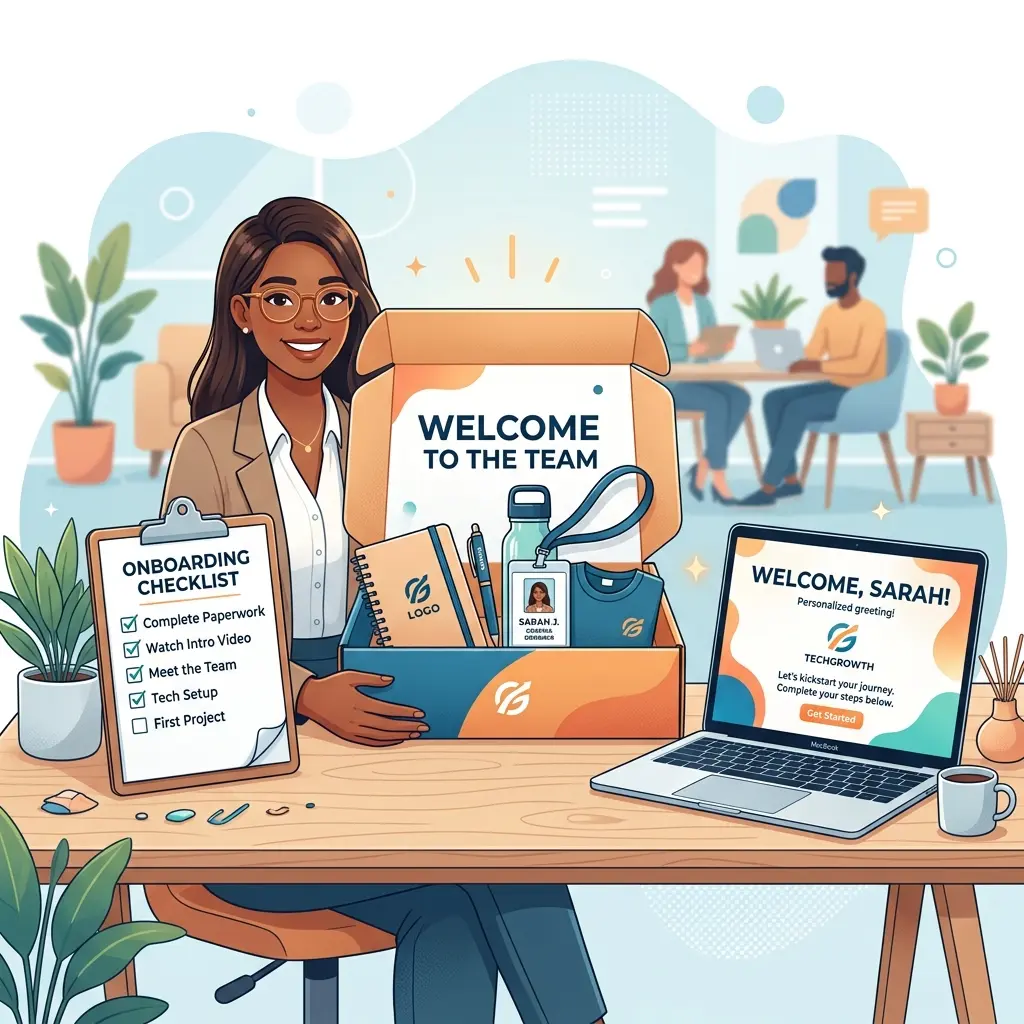
Most companies treat onboarding as a paperwork drill. They hand a new hire a stack of forms, point to a desk, and hope for the best. That’s not onboarding; that’s an administrative bottleneck. High-performing organizations treat onboarding as a systems engineering problem. They view the first ninety days as a high-stakes integration phase where the goal is to reduce "time-to-productivity" and build long-term retention.
When your onboarding process is messy, your new hires feel it. They experience friction, ambiguity, and a lack of clear expectations. By building a robust Standard Operating Procedure (SOP), you transform this chaotic hand-off into a predictable, scalable engine.
Key Takeaways: Employee Onboarding Checklist Best Practices
| Category | Core Principle |
|---|---|
| Pre-boarding | Start the workflow 14 days before the start date to eliminate Day One friction. |
| Logistics | Provision hardware, access rights, and security credentials 48 hours in advance. |
| Cultural Integration | Assign a "buddy" or mentor to provide informal guidance outside the reporting line. |
| Goal Setting | Define clear, measurable 30-60-90 day performance milestones immediately. |
| Compliance | Audit all paperwork against Society for Human Resource Management (SHRM) guidelines for regulatory alignment. |
Defining Onboarding Within Your Systems
In operations engineering, onboarding is the process of integrating a new "node" into the existing network of your organization. It’s not just HR; it’s an IT, security, and cultural deployment.
According to ISO 30414:2018—the international standard for human capital reporting—onboarding is a key metric for organizational health. It directly affects turnover rates and labor costs. If you lack a formal structure, you’re essentially introducing technical debt on your first day. When you begin candidate onboarding checklist implementations, you move from ad-hoc tasks to a repeatable, automated system.
Phase 1: Pre-boarding (The 14-Day Lead Time)
The most common point of failure occurs before the employee even walks through the door. If you wait until Monday morning to set up an email address, you have already wasted a full day of their potential output.
Your SOP should mandate that a ticket is automatically generated in your IT service management (ITSM) tool the moment an offer letter is signed. This ticket must trigger the following:
- Hardware Procurement: The laptop, peripherals, and security tokens should be shipped or ready at the desk.
- Access Provisioning: The new hire needs access to the internal wiki, Slack, Jira, and industry-specific tools by 9:00 AM on Day One.
- The "Welcome Package": Send a physical or digital care package. This sets a tone of professionalism.
- The Agenda: Never leave them wondering what happens next. Send the full first-week schedule via email on the Friday before they start.
Phase 2: The First Day (Contextualizing the Role)
Day One is not for filling out tax forms. Use software automation for tax and benefits paperwork so the actual start date can be dedicated to orientation, mission alignment, and introduction.
Focus on "System Familiarization." Don’t just explain the cafeteria menu. Explain the organization’s communication flow. Does the company prefer email for documentation or Slack for real-time collaboration? Where does the knowledge base live?
Assign a peer mentor. This person should not be their manager. It should be someone who knows the "unwritten rules" of the office, the tribal knowledge that isn't captured in the handbook. They provide the safety net for the inevitable "stupid questions" a new hire will have.
Phase 3: The 30-60-90 Day Cycle
Operations teams thrive on data and milestones. An onboarding checklist is incomplete if it doesn't extend into the first three months. If you lack clear targets, you create a "drift" where the employee doesn't know if they are performing well.
Days 1–30: The Learning Phase The primary goal here is to establish core competency. The new hire is consuming data, understanding the tech stack, and learning the customer profile.
- Metric: Completion of all mandated training.
- Metric: Successful completion of two minor, low-risk project tasks.
Days 31–60: The Contribution Phase Now, the employee starts adding value. They should be taking ownership of smaller sub-processes.
- Metric: Independence in navigating key software tools.
- Metric: Contributing to team meetings with actionable feedback or data.
Days 61–90: The Autonomy Phase By day 90, the employee should be operating with minimal supervision on core responsibilities. They are now fully integrated.
- Metric: Execution of a standalone project from start to finish.
- Metric: A formal "360-degree" feedback loop conducted by the manager.
Why "Ad-Hoc" Onboarding Fails
If your onboarding process is reactive, you are bleeding money. Research shows that employees who experience a structured onboarding program are 69% more likely to stay with the company for three years.
Without an SOP, you face "knowledge silos." New hires learn how to do a task from whoever happens to be sitting near them, rather than through the documented, optimized process. This leads to drift—where processes become inefficient or insecure over time because they weren't taught correctly at the start.
By maintaining a candidate onboarding checklist, you protect your institutional knowledge. You ensure that every hire, regardless of their department, understands the baseline security protocols, the communication hierarchy, and the operational expectations.
Managing Compliance and Regulatory Risk
In industries governed by OSHA or specific industry compliance standards, onboarding is also a critical risk management function. Compliance isn't just about HR paperwork; it's about verifying that every new team member understands safety, data privacy, and legal obligations.
Your SOP should include:
- GDPR/CCPA Training: Mandatory for anyone handling customer data.
- Cybersecurity Hygiene: The "Human Firewall." Every employee must pass a basic phishing and social engineering awareness test before being granted full network access.
- Audit Trails: Every training session, signature, and verification must be logged in your HRIS (Human Resource Information System). If an auditor arrives, you should be able to pull a report for any employee showing exactly what training they completed and when.
The Role of Technology in Scaling Onboarding
Don't build your onboarding SOP in a spreadsheet that sits on a shared drive. Use a dedicated workflow automation platform. Modern tools allow you to create "triggers" that make the process invisible and reliable.
For instance, when a status is updated to "Hired" in your Applicant Tracking System (ATS), it should trigger:
- An automated email to the IT department to provision hardware.
- An automated invite to the new hire for their onboarding portal.
- A notification to the hiring manager to schedule a team lunch.
When you automate the logistics, you free up your managers to focus on the human element: relationship building and professional development.
How to Measure Success
You cannot optimize what you do not measure. Track your onboarding success through these key performance indicators (KPIs):
- Time-to-Productivity: How many days does it take for a new hire to complete their first successful project independently?
- First-Year Retention Rate: If your onboarding is effective, your turnover in the first 12 months should decrease.
- New Hire Satisfaction Score: Use a short, anonymous survey at the end of week one and month three. Ask: "Did you have everything you needed on day one?" and "Are the expectations for your role clear?"
Addressing Common Cultural Pitfalls
One of the most dangerous myths is that "cultural fit" happens organically. That’s a recipe for exclusion. Cultural alignment must be designed.
Host a "Company DNA" session. Have the leadership team speak about the history of the business, the failures, the pivot points, and the values that drive decision-making. Don't just show them the mission statement on a slide—explain the trade-offs the company has made to protect those values.
Encourage cross-departmental integration. A software engineer should spend an hour shadowing someone in customer support. A salesperson should see how the product is deployed in the staging environment. This builds empathy and understanding of the "entire system," not just the department the employee sits in.
Putting This into Practice
Systems engineering is iterative. You will not have the perfect SOP on day one. You need to gather feedback.
After your next cohort of new hires finishes their 90-day period, conduct a post-mortem. Ask them what was missing. Did they have trouble getting into the VPN? Was the documentation for their primary tool outdated?
Update your documentation immediately. In a high-velocity environment, a document that is six months old is often as good as useless. Treat your onboarding checklist as a living product that requires regular maintenance, bug fixes, and feature updates.
When you treat onboarding as a critical operations process rather than a administrative chore, you build a foundation of excellence. You reduce the "noise" of the first few months, allowing your talent to focus on what they were hired to do: create value.
Start small. Audit your current process. Identify the biggest pain point—be it the hardware delay, the lack of clarity on goals, or the missing cultural context—and fix that first. Then, move to the next. By systematically dismantling the friction in your onboarding, you create a stronger, more resilient organization.

About the Author
Julian Vance is a systems architect and process engineering expert specialized in developing elite Standard Operating Procedures (SOPs) and fail-safe checklists.