Mastering 5S Audit Methodology: A Guide to Efficiency
Founder & Editor, Template Registry
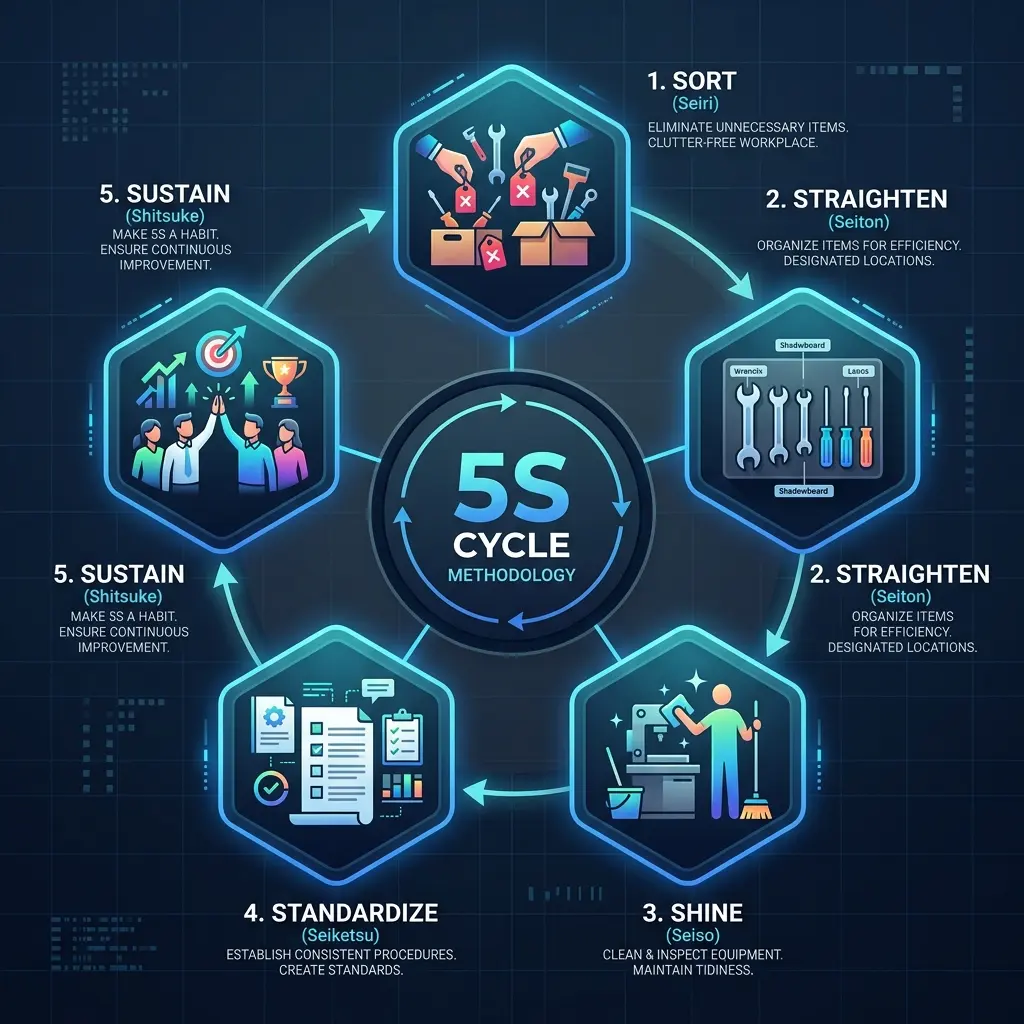
Efficiency in a manufacturing or office environment isn't about working faster. It’s about removing the friction that makes work hard. When tools are missing, supplies are buried under clutter, or workspaces are poorly defined, your team spends more time hunting and less time executing. The 5S methodology—Sort, Set in Order, Shine, Standardize, and Sustain—serves as the bedrock of lean operations. Yet, without a rigorous audit process, these gains vanish within weeks.
Core Components of 5S Audit Checklist Methodology
If you want to know what makes a successful 5S audit, look at the systematic approach to evaluation. Use this table as your foundational framework.
| Phase | Core Objective | Key Audit Indicator |
|---|---|---|
| Sort (Seiri) | Remove non-essential items. | Are red-tagged items cleared within 48 hours? |
| Set in Order (Seiton) | Place items for ergonomic access. | Does every item have a labeled, fixed location? |
| Shine (Seiso) | Inspect through cleaning. | Are machines free of leaks and debris? |
| Standardize (Seiketsu) | Document processes and roles. | Are visual management markers clearly visible? |
| Sustain (Shitsuke) | Integrate into daily habits. | Is the audit schedule strictly followed? |
Defining the Methodology
5S is a systematic approach to workplace organization rooted in Japanese manufacturing principles. It is not a one-time cleaning event. It is a management system. To remain compliant with OSHA regulations, companies must maintain clean and unobstructed work areas to prevent trip-and-fall hazards. An effective 5S program transforms these compliance requirements into operational advantages by ensuring that the right tools are always within reach.
- Sort (Seiri): The act of separating necessary tools from junk. If a tool hasn't been touched in three months, it doesn't belong in the immediate work zone.
- Set in Order (Seiton): Establishing a "home" for every item. If a worker has to walk more than three steps to find a common tool, the layout is broken.
- Shine (Seiso): Cleaning as an inspection tool. You clean to find potential failures, like leaking fluids or loose fasteners, before they cause downtime.
- Standardize (Seiketsu): Creating the visual cues—color coding, shadow boards, and tape lines—that make non-compliance immediately obvious to anyone walking by.
- Sustain (Shitsuke): The hardest phase. This is the discipline of continuous audit cycles and accountability meetings that keep the system from regressing.
Why Audit Methodology Matters
A 5S audit is not a "gotcha" moment for employees. It is a diagnostic tool for operations leaders. When you fail an audit, you aren't pointing fingers at the shop floor team; you are identifying a failure in the support system. Perhaps the labels are falling off, or the shadow boards are poorly designed.
If you manage a specialized workspace, implementing a 5s laboratory audit protocol is essential for maintaining the sterile and organized conditions required for high-precision tasks. The protocol you choose must scale with your environment. A warehouse requires different audit criteria than an R&D lab, but the focus on eliminating waste remains constant.
Designing Your Audit Checklist
Don't use generic checklists found online. Your checklist must reflect your specific operational risks. Start by defining what "good" looks like for every workstation.
1. Sort: The Red-Tagging Process
Your audit needs to verify that your red-tag area isn't a graveyard for broken items. Are you logging items that are removed? Does the supervisor verify the disposition of these items within a reasonable window?
2. Set in Order: The "Point-of-Use" Test
During your walkthrough, ask yourself: Does this tool location optimize the operator's posture? If an operator has to bend, reach, or walk excessively, your audit should trigger a redesign of that workstation layout.
3. Shine: Cleanliness as an Inspection
Look for root causes during the Shine phase. If a machine is constantly covered in oil, cleaning it is only a temporary fix. Your audit should ask: "Why is the machine leaking?" The audit isn't just about appearance; it's about identifying maintenance needs before they interrupt production.
4. Standardize: Visual Management
If a stranger walked into your facility, could they tell if a station is in compliance within 30 seconds? If the answer is no, your standardization is failing. Check for shadow boards, clear labeling, and defined floor markings. Ensure these markers aren't faded or peeling.
5. Sustain: The Human Factor
The best audit check is the one that forces a conversation. Don't just tick boxes. Talk to the operators. Ask them what hinders their efficiency. Are the audit scores tied to performance reviews? If not, the process will eventually lose its priority.
Structuring the Audit Cycle
Consistency beats intensity. An audit performed every two weeks is infinitely better than a massive "spring cleaning" audit performed once a year.
The Weekly Walkthrough: Designate 15 minutes on a Friday afternoon for supervisors to run a "blitz" audit. This is low-pressure. Focus on immediate hazards and basic housekeeping.
The Monthly Deep Dive: This audit involves cross-functional teams. Bring in someone from another department to audit your area. A fresh set of eyes will catch things your team has become "blind" to after working in the same environment daily.
The Quarterly Review: This is where you look at the metrics. Are your audit scores trending up? If your scores are high but your production quality is low, your audit checklist is measuring the wrong things. Adjust the criteria to align with your business goals, whether that’s reducing scrap or improving safety incident rates.
Common Pitfalls to Avoid
Many teams approach 5S as a chore. They clean the workspace once, snap a photo, and then let it fall back into disarray. This is the "5S trap."
- Over-Scoring: Don't give a 5/5 score just because the floor is swept. If the labeling is incorrect or the tools aren't functional, the score must reflect that. Honesty in auditing is the only path to improvement.
- Ignoring Ergonomics: Don't get so obsessed with aesthetics that you ignore the reality of how the work happens. If a shadow board is beautiful but prevents the operator from moving freely, you’ve prioritized form over function.
- Lack of Ownership: If the person responsible for the audit doesn't have the authority to fix the issues they find, the audit is a waste of time. Empowerment is key.
Integrating Technology and Visual Tools
Stop relying on paper checklists that get buried in a filing cabinet. Move your 5s audit checklist methodology to a digital format. Use tablets to photograph non-compliance and assign tasks immediately to the team responsible for that workstation.
When you make the findings visible to everyone—perhaps through a digital dashboard on the shop floor—the team feels a sense of ownership. When the whole team can see the audit trend, they move from being passive participants to active owners of their workspace.
Scaling 5S Across Departments
While 5S is often associated with the factory floor, the principles apply everywhere. An office team can use 5S to manage digital file structures, email workflows, and shared equipment like printers and scanners.
Start small. Pick one department as a pilot program. Prove that the 5S audit reduces frustration and increases output. Once you have a success story, use that team to mentor others. Leadership buy-in is necessary to sustain this, but the actual momentum comes from the frontline workers who finally have the tools to do their jobs without fighting their environment.
Putting This into Practice
If you are ready to restart your 5S efforts, do not try to overhaul the entire facility at once. Pick one area—perhaps a small, high-traffic workstation—and run a pilot audit. Use the checklist to identify three specific improvements you can make in the next 48 hours.
Document the "before" state with photos. Perform the improvements. Then, audit it again. Show the team the difference. Once they see that the audit process makes their daily tasks easier rather than just adding another administrative burden, you will have their support.
The ultimate goal of any audit is not a perfect score. The goal is a predictable, safe, and efficient work environment. Every time you walk the floor with your checklist, look for ways to eliminate waste, improve safety, and empower your team. The checklist is just the map; the real progress happens when you commit to the journey of continuous improvement every single day.

About the Author
Julian Vance is a systems architect and process engineering expert specialized in developing elite Standard Operating Procedures (SOPs) and fail-safe checklists.